 English
 عربى
عربى 中文简体
中文简体 Español
Submit feedback
Understanding In-Mold Label Applications Across Plastic Industries
Jan 16,2026
Packaging and product decoration methods are continuously evolving as manufacturers seek ways to integrate branding, durability, and production efficiency. Within this context, Plastic Bucket Label In-Mold Manufacturing, Wholesale Toy In-Mold Labels, and Supply In Mold Label Film have become closely connected solutions for plastic product producers. These approaches allow labels to become part of the molded product itself, rather than an external attachment, offering functional and visual advantages across multiple industries.
In-mold labeling is no longer limited to a single sector. From industrial buckets used in construction and chemicals to toys that require safe, long-lasting decoration, the role of label films and manufacturing processes has expanded significantly. Understanding how these systems work together helps buyers, brand owners, and manufacturers make informed decisions when selecting materials and suppliers.
How Does Plastic Bucket Label In-Mold Manufacturing Work in Practice?
Plastic Bucket Label In-Mold Manufacturing refers to a process where pre-printed labels are placed inside a mold before molten plastic is injected. As the plastic forms the bucket, the label fuses with the surface, creating a unified structure. This process eliminates the need for post-molding labeling steps and reduces the risk of peeling, wrinkling, or misalignment.
In industrial applications, plastic buckets often store materials such as paint, adhesives, chemicals, or food-grade substances. Labels on these containers must withstand handling, stacking, moisture exposure, and sometimes chemical contact. In-mold manufacturing allows label films to become part of the bucket wall, offering resistance to abrasion and environmental stress without adding separate adhesive layers.
From a production standpoint, this method improves consistency across large batches. Once mold setup and label placement parameters are defined, manufacturers can maintain uniform appearance and placement accuracy throughout the production cycle. This is especially relevant for brands that require clear product identification, regulatory information, or multilingual labeling.
Why Are In-Mold Labels Preferred for Plastic Buckets?
Plastic buckets are often reused, transported over long distances, and exposed to rough handling. Traditional pressure-sensitive labels can detach or fade under these conditions. In contrast, in-mold labels provide a more stable solution because they are protected by the plastic layer itself.
Another consideration is hygiene and cleanliness. In food and chemical packaging, smooth, integrated surfaces reduce areas where dirt or residue can accumulate. In-mold labeling supports this requirement by avoiding raised edges or adhesive seams. This makes plastic bucket label in-mold manufacturing particularly suitable for industries where cleanliness and traceability are important.
Design flexibility is also a factor. High-resolution graphics, gradients, and complex color layouts can be printed on label films before molding, allowing brands to present detailed visual information without compromising durability.
What Makes Wholesale Toy In-Mold Labels Suitable for Child Products?
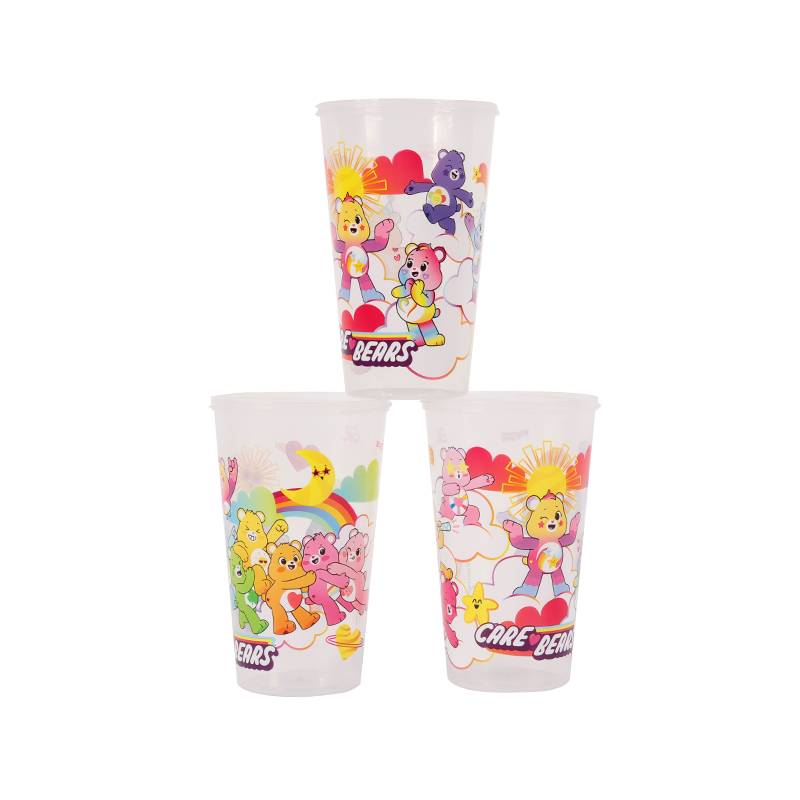
Wholesale Toy In-Mold Labels serve a different but equally demanding market. Toys are subject to frequent handling, impact, and sometimes exposure to moisture or saliva. Labels must remain intact and readable throughout the product’s lifecycle while meeting safety standards.
In-mold labeling addresses these concerns by embedding the decoration directly into the toy’s surface. This reduces the risk of small label fragments detaching, which is a key safety consideration for products intended for children.
Toy manufacturers often require consistent color reproduction across multiple production runs, especially for licensed characters or branded product lines. In-mold labels support this by allowing precise pre-printing under controlled conditions. When sourced through wholesale channels, these labels can be supplied in large volumes with consistent specifications, supporting both mass production and seasonal demand.
How Do Toy Designers Benefit From In-Mold Label Technology?
From a design perspective, in-mold labels enable smooth, seamless surfaces that enhance both visual appeal and tactile experience. Complex shapes, curved surfaces, and textured molds can all accommodate in-mold labels when the film is properly engineered.
Toy designers can also integrate functional elements into labels, such as measurement markings, instructions, or safety icons. Because the label becomes part of the molded surface, these elements remain legible even after extended use. This approach reduces the need for separate instruction stickers or printed inserts.
Wholesale toy in-mold labels also support faster assembly lines. Since decoration occurs during molding, there is no additional labeling step afterward. This simplifies production planning and reduces labor requirements, especially for high-volume toy manufacturing.
What Role Does Supply In Mold Label Film Play in Manufacturing?
Behind both bucket and toy applications lies the essential component: Supply In Mold Label Film. This film acts as the carrier for printed graphics and must meet strict technical requirements. Label films need to withstand molding temperatures, maintain dimensional stability, and bond effectively with the base plastic material.
Film selection depends on factors such as plastic type (PP, PE, or other polymers), mold design, and end-use conditions. A consistent supply of properly specified in-mold label film ensures that production lines operate smoothly and finished products meet quality expectations.
Suppliers of in-mold label film often work closely with manufacturers to adjust film thickness, surface treatment, and ink compatibility. This collaboration helps reduce defects such as warping, bubbling, or incomplete bonding during molding.
How Can Buyers Evaluate In-Mold Label Film Quality?
Evaluating in-mold label film goes beyond visual inspection. Buyers should consider film behavior during molding, including heat resistance and shrinkage control. Films that respond predictably under heat and pressure contribute to stable production outcomes.
Ink adhesion is another critical factor. Printed graphics must remain stable during molding and retain clarity after cooling. Film suppliers typically test ink compatibility and surface treatment levels to ensure consistent results.
For companies sourcing supply in mold label film for multiple product lines, standardization becomes important. Using films with consistent properties across different molds simplifies setup adjustments and reduces material variability.
When Is In-Mold Labeling More Practical Than Other Labeling Methods?
In-mold labeling is particularly practical when products are produced in high volumes and require durable decoration. For plastic buckets used in logistics, construction, or food processing, the ability to integrate labeling during molding improves efficiency and reduces long-term maintenance issues.
In toy manufacturing, where safety, durability, and appearance are equally important, in-mold labeling provides a balanced solution. It supports complex designs without introducing additional assembly steps or safety risks associated with detachable labels.
However, in-mold labeling requires careful upfront planning. Mold design, film selection, and printing specifications must align from the beginning. This makes collaboration between label film suppliers, mold makers, and product manufacturers essential.
Where Do Plastic Bucket and Toy Applications Overlap?
While plastic buckets and toys serve different markets, their in-mold labeling requirements often overlap in terms of material performance and production efficiency. Both require labels that can handle mechanical stress, maintain appearance over time, and integrate seamlessly with molded plastic.
In some cases, manufacturers produce both industrial containers and consumer products within the same facility. Using similar in-mold labeling systems across these product lines can simplify sourcing and quality control. Shared standards for supply in mold label film help streamline inventory management and technical training.
What Should Businesses Consider When Sourcing Wholesale In-Mold Labels?
Sourcing Wholesale Toy In-Mold Labels or labels for plastic buckets involves more than price considerations. Buyers should evaluate supplier capabilities in printing accuracy, material consistency, and technical support. Reliable communication and documentation are also important, particularly for products subject to regulatory requirements.
Testing samples under real production conditions is a practical step before committing to large orders. This allows manufacturers to verify label placement, bonding performance, and visual results. For ongoing supply, clear specifications and change control processes help maintain consistency across batches.
How Does In-Mold Labeling Support Long-Term Brand Visibility?
By becoming part of the product itself, in-mold labels support long-term brand visibility. Logos, product names, and usage information remain visible throughout the product’s lifespan, even after repeated handling or cleaning.
For plastic buckets reused across supply chains, this means branding and identification remain intact from filling to end use. For toys, it ensures that branding and decorative elements remain clear throughout play, storage, and resale.
This durability supports brand recognition without relying on replacement labels or additional packaging elements, aligning functional performance with marketing objectives.
PREV:Why Choose PET Transfer Film Exporter For Global Supply?
NEXT:Why Choose High Quality Heat Transfer Film For Decorations?
NEXT:Why Choose High Quality Heat Transfer Film For Decorations?
Leave A Reply
Your email address will not be published. Required fields are marked *



Wenzhou Jiafeng Technology Co., Ltd. specializes in the research and development of various heat transfer and in-mold labeling technologies.
-
Call our office
+86-577-64571870
- Send a message
-
Our address
No. 818, Haixi Road, Longgang City, Wenzhou City, Zhejiang Province
Copyright © Wenzhou JiaFeng Technology Co., Ltd.
China Heat Thermal Transfer Film Labels Factory
