 English
 عربى
عربى 中文简体
中文简体 Español
Submit feedback
Why Choose PET Transfer Film Exporter For Global Supply?
Jan 16,2026
Packaging and product decoration technologies continue to adapt to stricter regulations, diversified product categories, and evolving consumer expectations. Within this changing landscape, OEM Food Thermal Transfer Printing Films, PET Transfer Film Exporter, and Plastic Toy Heat Transfer Film For Sale represent interconnected solutions that support both functional performance and visual consistency. These materials are increasingly used by manufacturers seeking stable printing results, controlled production processes, and compatibility with plastic substrates across food and toy applications.
Thermal transfer films provide a way to apply graphics, text, and functional markings without direct printing onto the product surface. By understanding how different film types serve specific industries, buyers and manufacturers can better match materials to production conditions and end-use requirements.
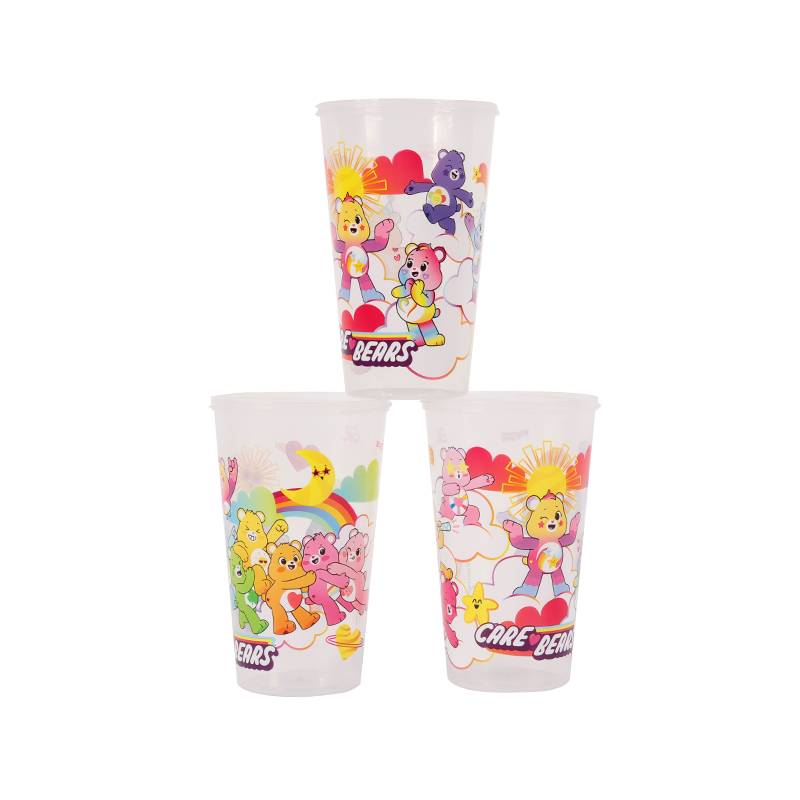
What Defines OEM Food Thermal Transfer Printing Films?
OEM Food Thermal Transfer Printing Films are designed for food-related packaging and containers where surface decoration must align with regulatory, hygiene, and durability requirements. These films are commonly used on plastic food boxes, containers, lids, and disposable or reusable packaging items.
OEM production allows films to be customized according to client specifications, including film thickness, ink formulation, release layer structure, and compatibility with various plastic substrates. This level of customization supports consistent printing results across different container shapes and production lines.
In food packaging, thermal transfer films are often selected to ensure that printed information such as product names, usage instructions, or branding remains legible throughout storage, transportation, and handling. The thermal transfer process also reduces ink migration risks by keeping printed layers encapsulated within the film structure.
How Do Food Thermal Transfer Films Support Packaging Safety?
Food packaging requires careful material selection to avoid contamination risks. Thermal transfer printing films used for food-related applications are engineered to work under controlled heat and pressure, ensuring that inks transfer cleanly onto the substrate surface.
By using pre-printed films rather than direct printing on containers, manufacturers can better control ink placement and curing conditions. This approach reduces inconsistencies and helps maintain clean production environments.
OEM food thermal transfer printing films are typically applied to the exterior of containers, but their performance still influences overall product quality. Smooth adhesion, resistance to moisture, and stable print clarity are essential for maintaining readable information throughout the product lifecycle.
Why PET Materials Are Commonly Used In Transfer Films?
PET Transfer Film Exporter solutions play an important role in global supply chains because PET (polyethylene terephthalate) offers balanced mechanical and thermal properties. PET films provide dimensional stability during heat transfer, allowing precise image alignment and consistent transfer results.
PET-based transfer films are widely used across industries due to their resistance to deformation under heat and pressure. This makes them suitable for automated production lines where temperature control and application speed are critical.
Exporters specializing in PET transfer films often provide a range of surface treatments and release coatings to suit different substrates. These variations allow manufacturers to select films that match specific plastic materials, including PP, PE, and ABS, without requiring major process changes.
How Does A PET Transfer Film Exporter Support International Manufacturing?
A PET Transfer Film Exporter does more than supply raw materials. Exporters often work closely with overseas clients to align technical specifications, packaging standards, and logistics requirements. Consistent roll width, film thickness, and print performance are critical for manufacturers operating high-volume production lines.
Export-grade PET transfer films are typically produced under standardized quality control systems. This helps ensure uniformity across shipments, which is essential for companies producing the same product in multiple facilities or countries.
Exporters may also provide technical documentation, application guidelines, and testing support, enabling buyers to integrate films into existing production workflows with fewer adjustments.
What Makes Plastic Toy Heat Transfer Film For Sale Different?
Plastic Toy Heat Transfer Film For Sale targets a unique set of requirements driven by safety, durability, and design flexibility. Toys are handled frequently, exposed to friction, and sometimes cleaned repeatedly. Decorative films applied to toy surfaces must maintain adhesion and visual clarity over time.
Heat transfer films used for toys allow graphics to bond directly to plastic surfaces without the use of adhesives. This reduces the risk of peeling or detachment, which is especially important for products intended for children.
Toy heat transfer films are often used on items such as plastic figures, building blocks, educational toys, and outdoor play equipment. These films support a wide range of colors and patterns, enabling manufacturers to meet market demands for visually engaging products.
How Do Heat Transfer Films Improve Toy Manufacturing Efficiency?
In toy production, efficiency and consistency are closely linked. Heat transfer films simplify decoration by combining printing and application into a single step.
This approach reduces reliance on manual painting or labeling, which can introduce inconsistencies and increase labor costs. Heat transfer also works well with complex shapes, allowing designs to conform to curved or textured surfaces commonly found in toy products.
Plastic toy heat transfer film for sale is often supplied in formats compatible with automated or semi-automated presses, supporting scalable production while maintaining consistent quality.
When Should Manufacturers Choose OEM Thermal Transfer Solutions?
OEM thermal transfer solutions are suitable when standard films do not fully meet production or design requirements. Customization may be needed for specific plastic materials, operating temperatures, or design elements such as fine lines or color transitions.
For food packaging, OEM solutions allow manufacturers to align films with internal quality standards and regulatory considerations. For toys, OEM customization can support unique product designs or seasonal collections without redesigning production equipment.
Choosing OEM food thermal transfer printing films or customized toy films can reduce trial-and-error during production and help stabilize output quality over time.
Where Are PET Transfer Films Commonly Applied?
PET transfer films are used across multiple sectors beyond food and toys. Applications include household items, promotional products, packaging components, and consumer electronics accessories. Their versatility stems from PET’s stable physical properties and compatibility with various inks and coatings.
In food packaging, PET transfer films are applied to containers, lids, and trays. In toy manufacturing, they decorate surfaces that require long-lasting color and pattern retention. This cross-industry applicability makes PET transfer film exporters important partners for manufacturers serving diverse markets.
What Should Buyers Consider When Purchasing Heat Transfer Films?
When evaluating OEM Food Thermal Transfer Printing Films, PET Transfer Film Exporter offerings, or Plastic Toy Heat Transfer Film For Sale, buyers should consider material compatibility, application temperature, film release behavior, and print durability.
Testing films under actual production conditions is essential. Factors such as pressure settings, dwell time, and substrate surface condition can influence final results. Collaboration with suppliers during the evaluation phase helps identify suitable specifications and reduce production risks.
Buyers should also consider long-term supply stability. Consistent film performance across batches supports predictable production planning and reduces quality fluctuations.
How Do Heat Transfer Films Support Branding And Information Clarity?
Thermal transfer films allow manufacturers to present clear, consistent branding and product information. Printed elements are transferred precisely to the product surface, maintaining alignment and color stability.
In food packaging, this clarity supports consumer understanding and regulatory compliance. In toys, it enhances product appearance and reinforces brand identity. Because the transferred graphics are bonded to the surface, they remain legible even after repeated handling.
This durability reduces the need for re-labeling or replacement packaging, supporting both operational efficiency and product presentation goals.
How Industry Collaboration Enhances Heat Transfer Film Performance
The performance of heat transfer films depends on collaboration between film producers, exporters, and end-users. Feedback from production lines helps suppliers refine film formulations and release characteristics.
As production technologies evolve, thermal transfer films continue to adapt to new materials, faster cycle times, and more complex designs. Manufacturers that engage with suppliers early in product development are better positioned to integrate suitable films without disrupting existing workflows.
PREV:Is Your Brand Ready for the Next Generation of Surface Innovation? Discover the Real Value Behind Plastic Finishing!
NEXT:Understanding In-Mold Label Applications Across Plastic Industries
NEXT:Understanding In-Mold Label Applications Across Plastic Industries
Leave A Reply
Your email address will not be published. Required fields are marked *
Related products



Wenzhou Jiafeng Technology Co., Ltd. specializes in the research and development of various heat transfer and in-mold labeling technologies.
-
Call our office
+86-577-64571870
- Send a message
-
Our address
No. 818, Haixi Road, Longgang City, Wenzhou City, Zhejiang Province
Copyright © Wenzhou JiaFeng Technology Co., Ltd.
China Heat Thermal Transfer Film Labels Factory
